Our philosophy
Student thinking belongs at the center of the learning process.
Teachers today know one thing for certain: The answer is not the same as the learning.
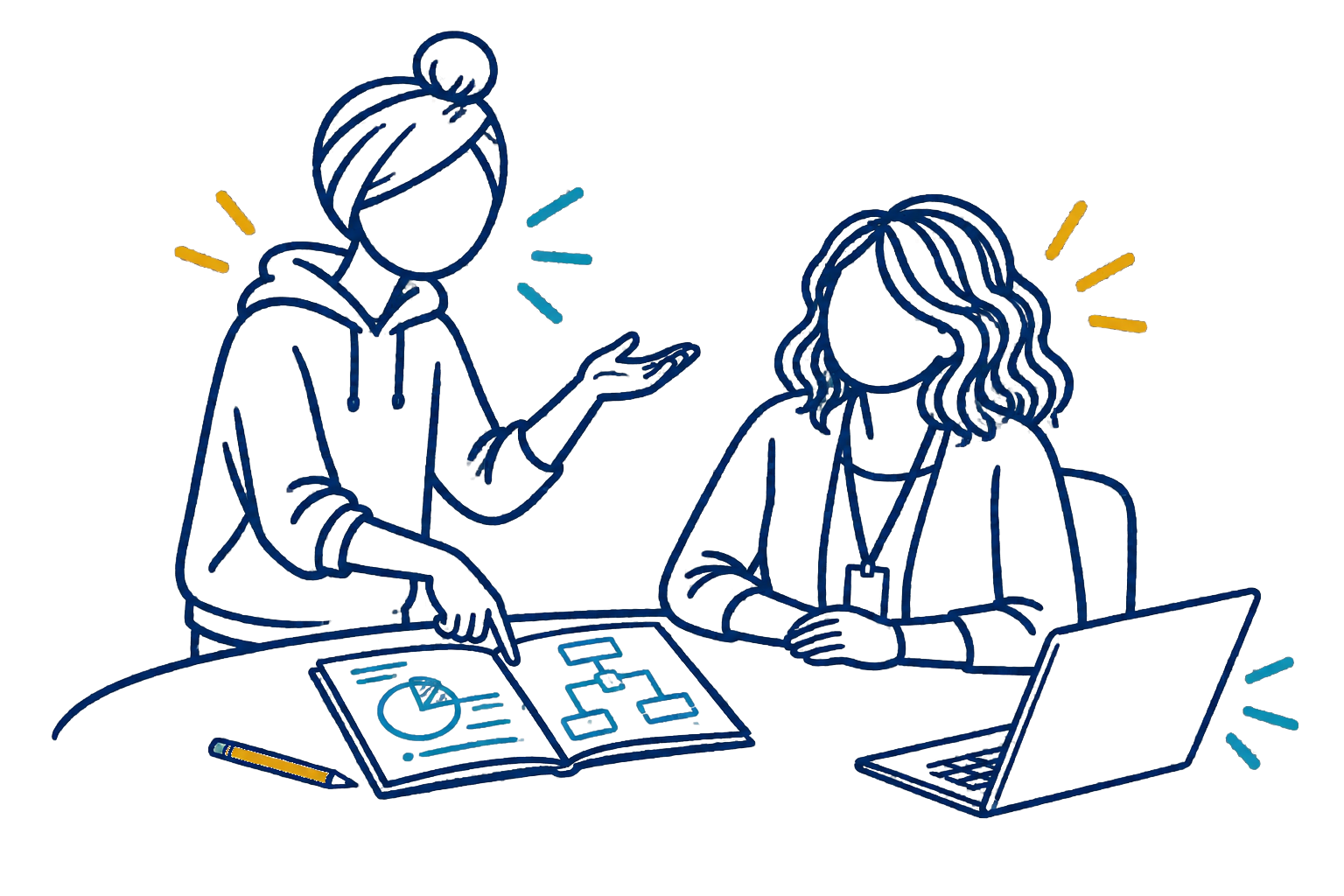
The work that matters is the work students do
A finished answer can look impressive and still tell us very little about what a student understands. We want students to do more than turn something in. We want them to wrestle with ideas, make choices, explain themselves, respond to feedback, and recognize when their thinking needs to change. That is why CL Learning Labs is designed to help make the learning process more visible, not hide it behind a polished final product.
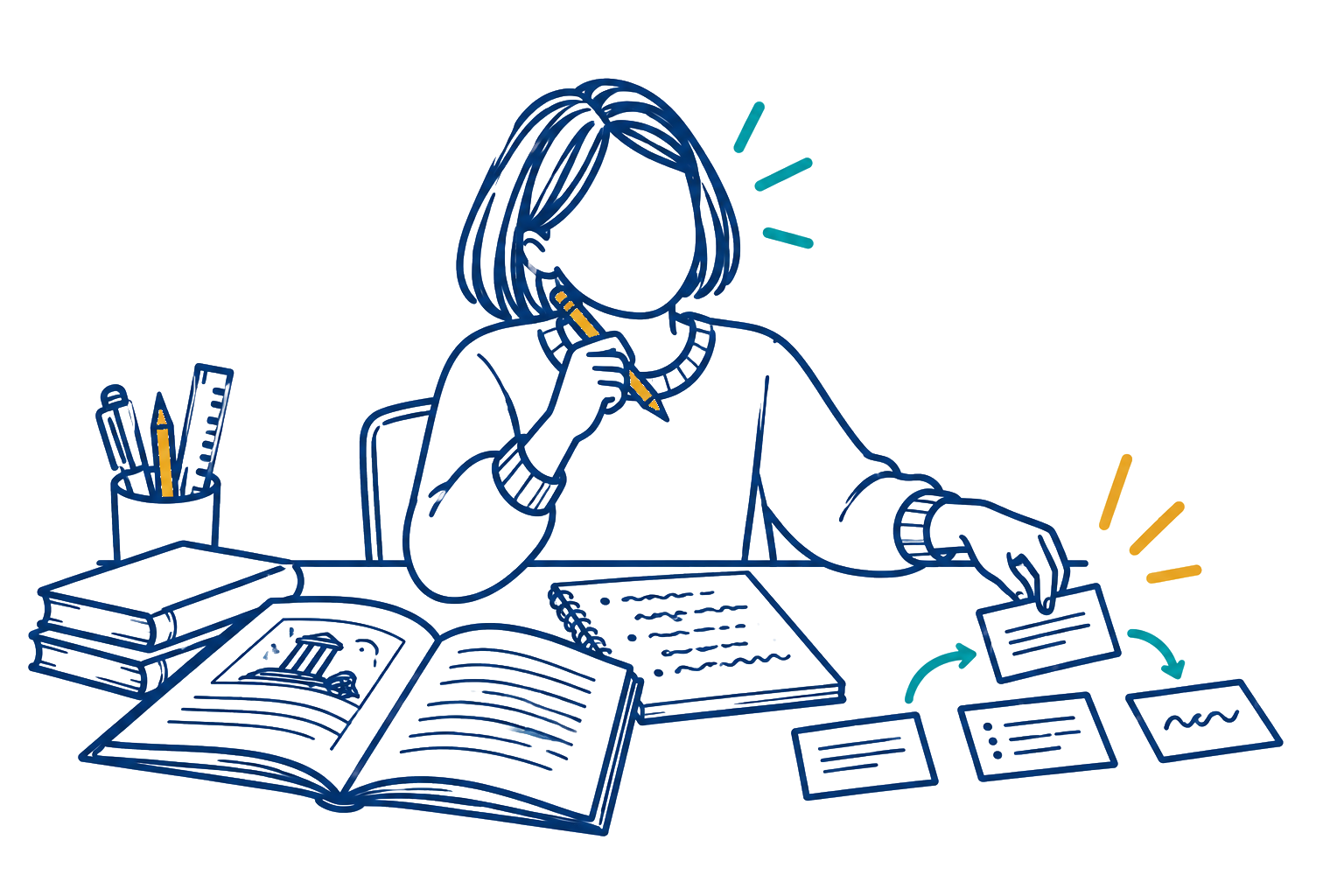
AI should support learning, not replace it
AI can be useful. It can give students another way into a difficult idea, provide practice, and offer timely feedback. But it can also make it very easy to avoid the thinking that learning requires. We do not think schools should have to choose between pretending AI does not exist and handing every intellectual task over to an open-ended chatbot. There has to be another path. That is the path we are trying to build: AI inside a structured learning experience, with a clear role and clear limits. Coach Engine™ may offer a question, hint, explanation, or revision prompt. It should not write a student’s response, choose the student’s claim, evaluate the evidence for them, or take over the important decisions. The student still has to do the thinking.
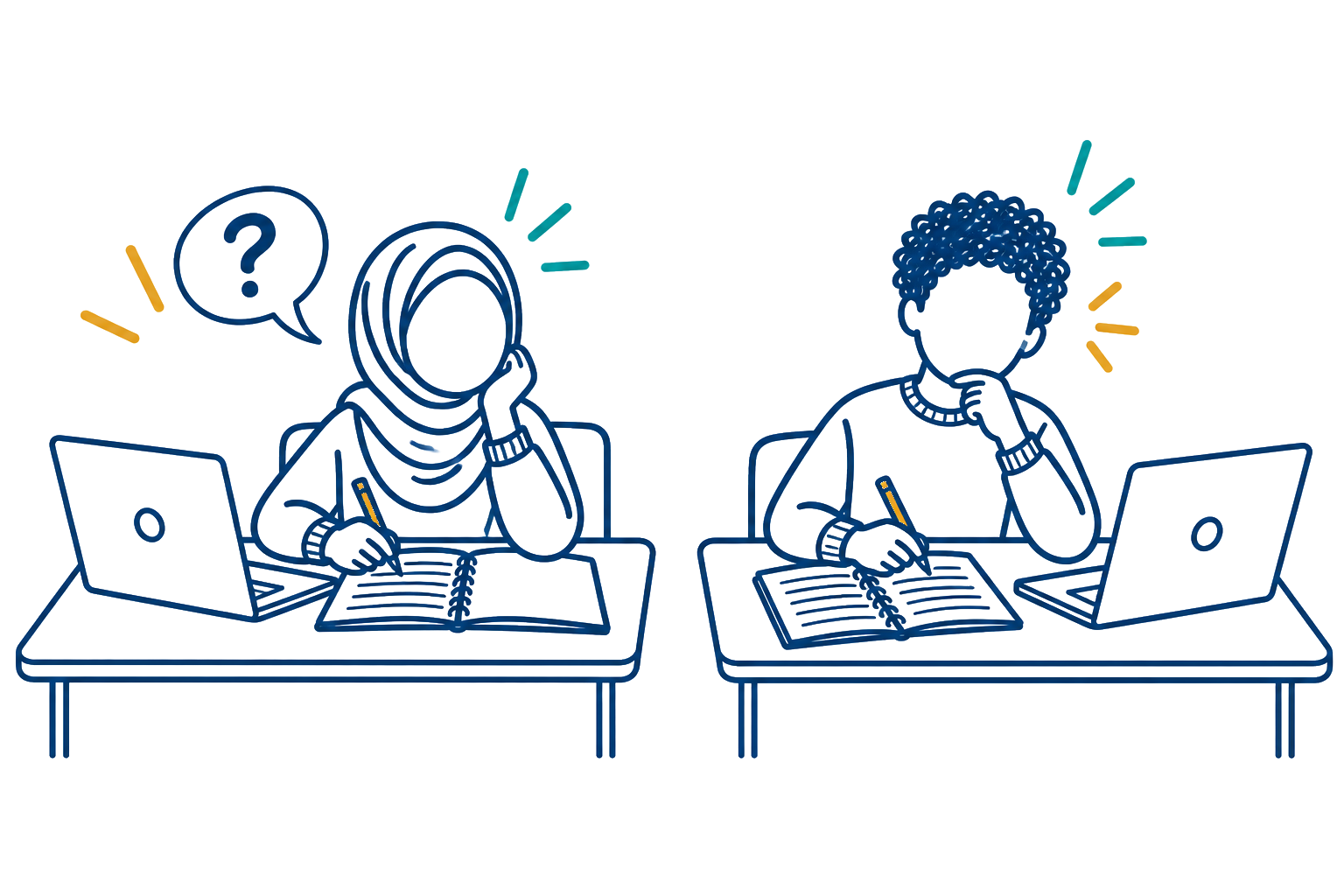
Remove barriers. Preserve the thinking.
Not every difficulty is useful. Confusing directions, inaccessible interfaces, unsupported failure, and long delays before helpful feedback can get in the way of learning. Those barriers should be removed. But we should not remove the productive work simply because technology makes that possible. Students still need to retrieve knowledge, interpret information, make judgments, explain their reasoning, respond to feedback, and decide how to revise. The goal is not to make learning effortless. The goal is to make the effort worthwhile.
Teachers remain central
Teachers know their students, their classrooms, their subjects, and the larger situation in ways no automated system can fully know. Teachers decide what matters, what deserves attention, what kind of support is appropriate, and what should happen next. A dashboard cannot replace that judgment. What technology can do is help teachers see more of the work behind a final answer: what students tried, how they responded to feedback, what changed, and where a conversation might help. Those records can be useful evidence. They are not verdicts about ability, effort, authorship, intent, or mastery.
Learning should lead to greater independence
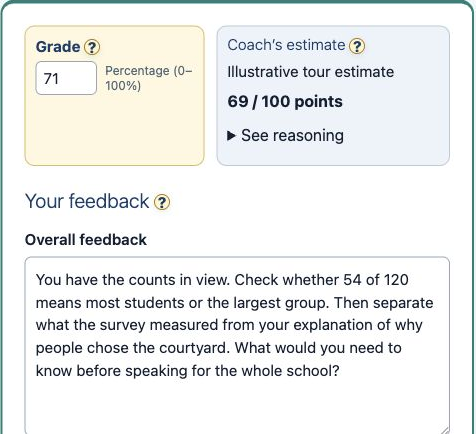
The goal is not for students to need more technology forever. Real learning shows up later, when students can explain what they are doing, use an idea in a new situation, recognize when something is not working, revise deliberately, and make meaningful choices with less support. We want students to leave school with more than completed assignments. We want them to have stronger judgment, more confidence in their own thinking, and the ability to create, communicate, and contribute in the real world.
Design commitments
What we are trying to build
- Human agency
- Students remain responsible for the important intellectual decisions.
- Clear, honest support
- Students should know when AI is involved, what kind of help it is offering, and where its limits are.
- Bounded coaching
- Support should begin with a useful question or next step, not an answer that lets the student skip the work.
- Teacher judgment
- Teachers remain responsible for interpretation, instruction, relationships, and decisions.
- Evidence with humility
- Records can help us notice patterns and ask better questions. They can never tell the whole story by themselves.
- Growing independence
- The strongest outcome is not a more polished answer today. It is a student who can understand, explain, transfer, and do more independently tomorrow.
The North Star
The point is real learning
Technology should make it easier to do the work that matters, not easier to avoid it. That is what we mean when we say: Real learning requires real thinking.
See it for yourself
See what these commitments look like in practice.
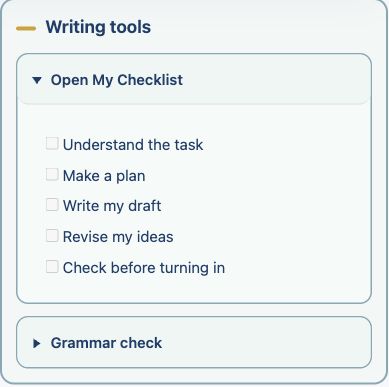
Choose a guided tour of Writing or APs. See how students keep the thinking, how teachers review the work, and where feedback leads next.